
THE 2026 PLAYBOOK
How to open a dispensary
Eight steps from idea to opening day — licensing, location, buildout, and the tech — from the company whose screens run in 950+ dispensary storefronts. Pick your state below for the local rules.
THE PLAYBOOK
Eight steps to opening day
The order matters more than the speed. Every state tweaks the details — caps, lotteries, opt-outs — but the build is the same eight moves everywhere.
- Do the research. Raise the capital. Pick your state, read the actual regulations — not a summary of them — and learn the license types, ownership rules, and residency requirements. Then raise more than you think you need. Weak funding proof and rushed plans are what kill applications.
- Apply for the license. Every state runs this differently: rolling applications, scored competitive rounds, lotteries, social equity set-asides. Know which game your state is playing, track the windows, and have your disclosures, financials, and operating plan ready before they open.
- Lock the location — and the municipal yes. Zoning, buffer distances from schools, local caps, opt-outs, community agreements. In most states the town’s approval decides more than the state’s does — get it before you sign a lease.
- Build out the store. Security cameras, secure storage, check-in flow, ADA access, and whatever else your regulations demand. Inspectors sign off before product moves, so design the compliance and the customer flow at the same time.
- Stand up the POS and seed-to-sale. The state tracks every gram, and your POS is what reports it — Metrc, BioTrack, and state-run systems each have quirks. Pick a POS from the majors and confirm the reporting connection before opening week.
- Hire and train the team. A GM who runs the floor, budtenders who can read a customer, and compliance training that sticks. Many states require employee permits or badges — that’s lead time, so schedule it.
- Get the menus and screens right. The menu is the store. Seed runs TV menus and kiosks synced to your POS so prices and stock are always right — typically live about a week after you sign, priced per location with unlimited screens and users.
- Open the doors. Soft-open first. Watch the line, watch the data, fix the slow spots, then make noise. Opening day is a rehearsal you charge for.
BEST PRACTICES
How the stores that make it actually run this
The steps are the map; these are the habits. Patterns from watching hundreds of stores open — including the 950+ storefronts that run their screens on Seed.
Sequence the money like an operator
The visible costs are the license and the buildout. The invisible ones are rent on a building you can’t open yet and payroll before revenue — model the dead months between approval and opening day, because that gap is where new stores quietly die. Raise for the gap, not the checklist.
Win the town before the state
In most states the municipal yes is the scarce asset — zoning, buffer distances, community meetings, sometimes a formal agreement. Show up with a real security plan and a good-neighbor story, not a pitch deck. And never sign a lease you couldn’t walk away from before the town votes.
Design compliance into the floor plan
Cameras, secure storage, check-in flow, and sightlines belong in the first drawing, not the punch list. Inspectors sign off before product moves, and retrofitting compliance after a failed walkthrough is the expensive version of the same work. Design the customer flow in the same pass.
Buy the tech in the right order
POS first — it has to report cleanly into your state’s tracking system, so confirm that before you sign anything. Menus and screens second, synced to that POS so nobody ever retypes inventory. Loyalty and analytics after. Stores that buy backwards end up owning systems that don’t talk to each other.
Train for the audit, not the tour
Compliance culture is set in week one and almost impossible to install later. That means budtenders who card correctly on a slammed Friday, inventory counts that reconcile without drama, and a paper trail that doesn’t need explaining. Many states require employee badges or permits — schedule that lead time.
Treat the soft open as a rehearsal
Invite friends and industry first. Watch where the line stalls, where customers hesitate, what the register data says sold and what didn’t. Fix the slow spots, then make noise. Your first month of data is the cheapest consultant you will ever hire.
LEARN IT THE CHEAP WAY
The five mistakes that kill new dispensaries
- Raising exactly enough. Thin capital meets reality — a delayed inspection, a buildout surprise — and the project stalls with the finish line in sight.
- Signing the lease before the local yes. Paying rent on a building the town won’t let you open is the most common self-inflicted wound in this industry.
- Treating compliance as a punch-list item. Retrofitting cameras, storage, and check-in flow after an inspector fails you costs double and delays opening.
- Buying tech backwards. Screens, loyalty, and ecommerce picked before the POS means re-platforming later — or living with systems that don’t talk.
- Skipping the soft open. Debugging the store on your loudest day, in front of the customers you most wanted to impress.
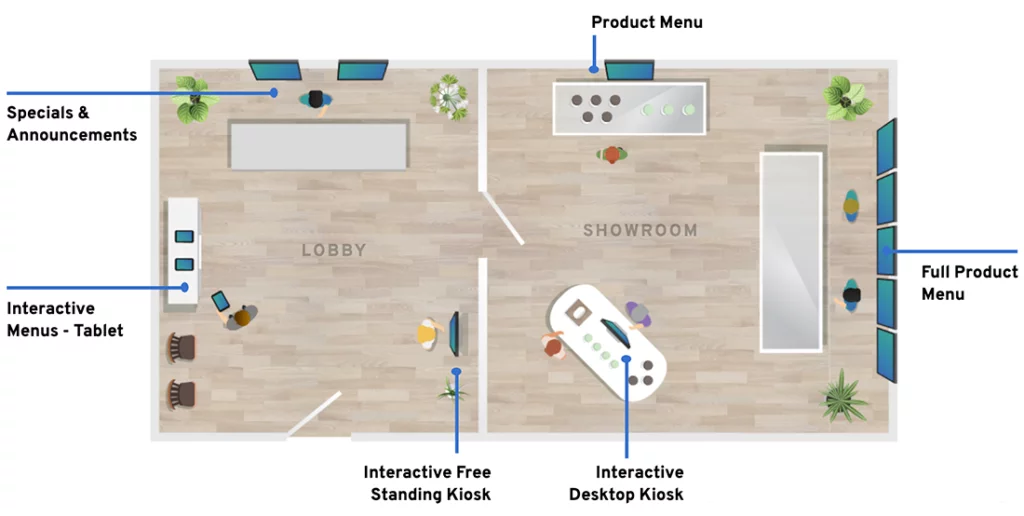
STEP SEVEN, IN PRACTICE
Screens are the easy step — if you only do them once.
Menus are how a new store looks finished on day one. Seed TV menus sync to your POS so prices and stock are always right, kiosks shorten lines and grow carts, and most stores go from signed to live in about a week. Wire it in during buildout and stop thinking about it.
STATE BY STATE
Pick your state
The eight steps are evergreen. The licensing reality — caps, lotteries, opt-outs, tracking systems — is state by state. That’s what these guides are for.
Adult-use markets
Medical-only markets
Opening a dispensary: questions, answered
How much does it cost to open a dispensary?
How long does it take to open a dispensary?
Should I open in a medical-only or adult-use state?
What tech does a new dispensary need on day one?
Do my menus need to match my POS?
When should I bring in Seed?
What are the most common mistakes when opening a dispensary?
In what order should I buy my tech?
BEFORE YOU BUILD
Planning your buildout? Get the screens right the first time.
Book a demo and we'll walk your floorplan, your POS shortlist, and what day one should look like on screen — before the walls are painted.