
SEED SELF SERVICE
Self-service kiosks for California dispensaries
Shorter lines, bigger carts, and loyalty sign-ups that happen on their own — kiosks synced live to your POS. California is the biggest cannabis retail market in the country and the most competitive block by block — the store that runs cleaner wins the corridor.
KIOSKS IN CALIFORNIA
Built for the room California actually has
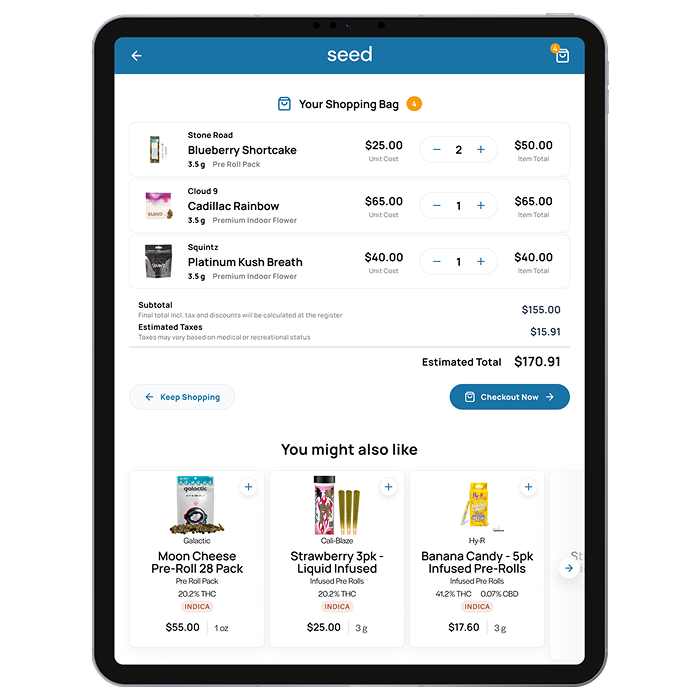
Regulars want out in five minutes; first-timers want to read without being hovered over. Kiosks serve both: an express lane for the shoppers who know their order, and pressure-free browsing for the ones still deciding — sort, filter, and read at their own pace, which matters in a store where the products live behind glass. Checkout asks for three things — first name, last name, phone number — and the order lands in your POS.
40% higher average order value
Nobody explores add-ons while a line forms behind them. Kiosks let shoppers browse without the clock — and our recommendation engine suggests relevant products at the moments that matter. Less rush, bigger carts.
150% more loyalty sign-ups
Enrollment happens at the kiosk, mid-order, with no extra step at the counter — which is why stores see dramatically more sign-ups than on standard kiosks. Loyalty grows while the line moves.
Your brand on the glass, not ours
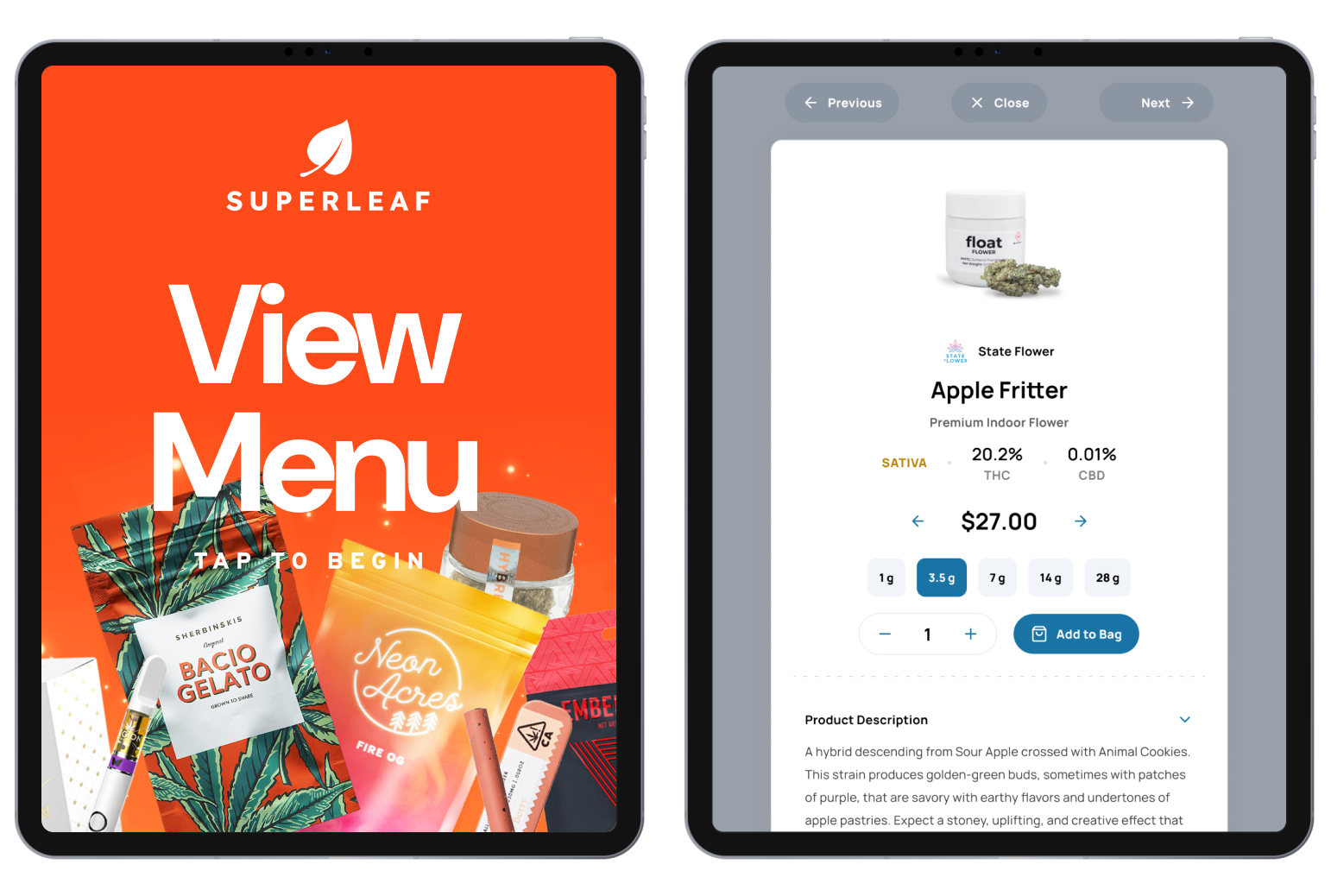
Kiosks are fully white-label: your colors, your logo, your voice. And checkout asks shoppers for exactly three things — first name, last name, phone number — because sixteen form fields is how you end a line-skipping express lane.
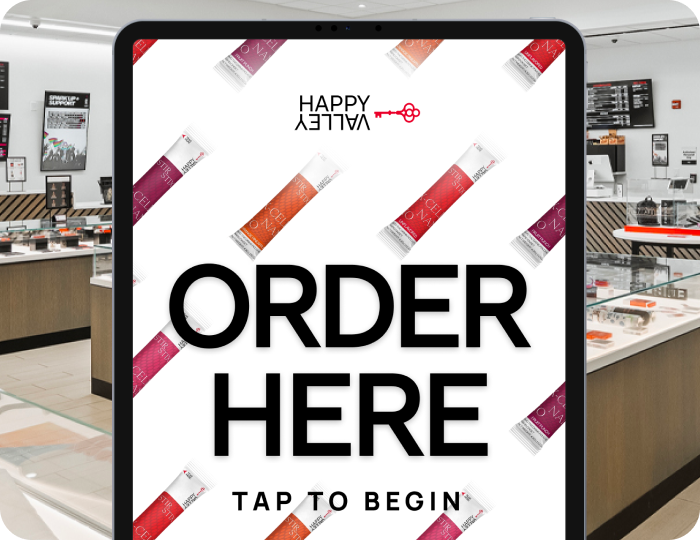
“Happy Valley has reported up to 26% larger order sizes on Seed, compared to traditional sales.”
Dispensaries with self-service kiosks report:
Decreased Time Per Transaction
Increased Cart Sizes and Sales of Featured Products
Reduction of Average Staffing Costs
Customer Satisfaction of the Modern Experience
Trusted by dispensaries across the country, from MSOs to mom-and-pops












IN-STORE SCREEN RULES · CALIFORNIA
What you can show on screens in California
A California dispensary’s in-store screens are "marketing" under the statute, which expressly includes point-of-sale advertising, so content must be truthful and consistent with product labels, must not encourage under-21 use or be attractive to children, must not make untrue or misleading health claims, and should carry the licensee’s license number. Indoor signs not visible from a public place are exempt from the 1,000-foot school and daycare rule, and a store’s own menu is not an "advertising sign" under the statute in any case. Screens may show prices and discounts, but may not promote free cannabis or accessories, buy-one-get-one offers, or contests, sweepstakes, or raffles; the 71.6 percent audience rule is written for broadcast, print, and digital placements and does not clearly reach an in-store screen. There is no potency-display rule for menus, no window-visibility rule for screens (only the QR-code certificate must be visible from outside), and no pre-approval, sign-size, or motion rule; local ordinances may add signage requirements.
Applies to: all licensees, adult-use and medicinal, under the same rules. Regulator: California Department of Cannabis Control (DCC).
- In-store promotional content is marketing, so the marketing rules apply at the point of sale. “any act or process of promoting or selling cannabis or cannabis products, including, but not limited to, sponsorship of sporting events, point-of-sale advertising” (Bus. & Prof. Code § 26150(e))
- All advertisements and marketing must identify the licensee by at least its license number. “All advertisements and marketing shall accurately and legibly identify the licensee responsible for its content, by adding, at a minimum, the licensee’s license number.” (Bus. & Prof. Code § 26151(a)(1))
- Indoor signs not visible from a public place are exempt from the 1,000-foot school, daycare, playground, and youth-center rule if they do not encourage under-21 consumption. “advertising signs inside a licensed premises and which are not visible by normal unaided vision from a public place” (Bus. & Prof. Code § 26155(a))
- No advertising or marketing intended to encourage under-21 consumption, and none attractive to children (cartoons, child-marketed characters or phrases, candy imitation, the word "candy"). (Bus. & Prof. Code § 26152(e)-(f); 4 CCR § 15040(a)(3))
- No untrue or misleading health-related statements; all advertising must be truthful, substantiated, and consistent with the label. (Bus. & Prof. Code §§ 26151(d), 26152(a)-(b), 26154)
- No giving away cannabis, cannabis products, or accessories as a business promotion; advertising free goods, buy-one-get-one offers, and contests, sweepstakes, or raffles is prohibited in the listed media. Prices and ordinary discounts are not restricted. “Shall not advertise free cannabis goods or cannabis accessories. This includes promotions such as: (A) Buy one product, get one product free” (Bus. & Prof. Code § 26153; 4 CCR §§ 15040(a)(4), 15040.2)
- The 71.6 percent audience requirement applies to broadcast, cable, radio, print, and digital placements; in-store screens are not mentioned. (4 CCR § 15040(a)(1); Bus. & Prof. Code § 26151(b))
- No rule restricts menus or ads visible through windows; the QR-code certificate must be visible and scannable from outside. Cannabis goods themselves may be displayed only in the retail area. (4 CCR §§ 15039(c), 15405(a))
- No rule on depiction of adult consumption, sign size or count, pre-approval, fees, or video and motion was found; outdoor signs must be affixed to a building or permanent structure and follow local rules. (4 CCR § 15040(b)(1))
Potency on menus: No rule found for menus or screens; potency appears only in labeling requirements.
Where the rule is "keep it accurate," a menu that reads from the POS does the work: sold-out products drop off on their own and the price on the wall is the price at the register. Where the rule is about content, the layout and the campaign are yours to keep inside the lines.
Sources (5)
- Bus. & Prof. Code §§ 26150-26155 — definitions, license number, prohibited advertising, giveaways, health statements, indoor sign exemption
- Bus. & Prof. Code § 26152 — prohibited advertising and marketing, amended effective January 1, 2026
- Bus. & Prof. Code § 26155 — indoor signs not visible from a public place
- 4 CCR §§ 15039, 15040, 15040.2, 15405 — DCC regulations: license display, advertising placement and prohibitions, giveaways, product display (consolidated July 1, 2026)
- DCC advertising and marketing guidance — regulator compliance page
Summary for kiosks operators, reviewed against the primary sources on September 24, 2026. Not legal advice. Rules change; confirm with California Department of Cannabis Control (DCC) before a campaign goes live. Every state: in-store screen rules by state.
Kiosks in California: questions, answered
Do California dispensaries use self-service kiosks?
Does a Seed kiosk work with my POS?
Will the kiosk say Seed on it?
Will self-service replace my budtenders?
What does a kiosk cost?
How fast can my store go live?
What can a California dispensary show on its in-store screens?
Screens beyond the kiosk: TV menus for California dispensaries. Still building the store? Start with how to open a dispensary in California.

GET STARTED
Put a kiosk to work in your California store.
Book a quick call — bring your current setup (or the line you wish was shorter) and we'll show Seed running on your live menu.